Remote operators let you deploy autonomy earlier and run it more safely. With humans in the loop, your stack can take the conservative option (pause or hand off when a situation is unfamiliar) instead of having to solve every edge case before launch. You ship from day one, gather real-world data, and keep a human safety net in place. As the autonomy matures, the same operators supervise more vehicles: direct drive becomes waypoint review becomes passive monitoring.
How does Voysys differ from WebRTC, Livekit, or other video stacks?
WebRTC is built for video calls; teleoperation is a different problem with different requirements. Voysys has spent over ten years tuning encoders, multi-link transport, and operator presentation specifically for remote control of machines, not for conferencing. The result: tighter hardware integration and more aggressive bitrate adaptation than a general-purpose WebRTC stack can offer.
What latency does Voysys achieve?
Ultra-low-latency glass-to-glass streaming is achievable in best-case dual-cellular setups, demonstrated in a 2020 race-car teleoperation test. Glass-to-glass is photon-in to photon-out; the full control loop adds actuator round-trip on top. Hydraulic vehicles tolerate more. Peer-reviewed research (Rossander et al. 2024) independently confirmed low system inherent delay under operational forestry conditions.
What does the integration look like? Is this a long project?
On your vehicle you run our slim background daemon. In one deployment on Jetson AGX Orin with 6 1080p cameras we only use 2% GPU when remote operation is active. Nothing in your hardware stack needs to change.
What industries use Voysys technology?
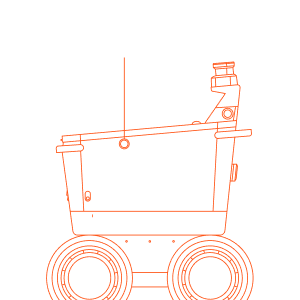
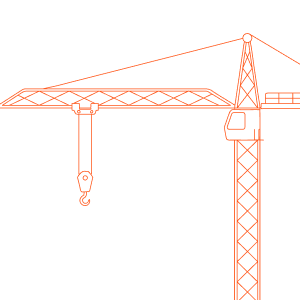
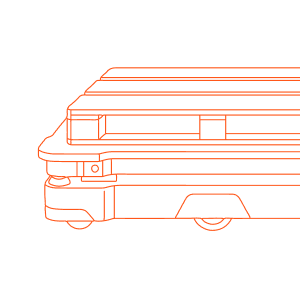
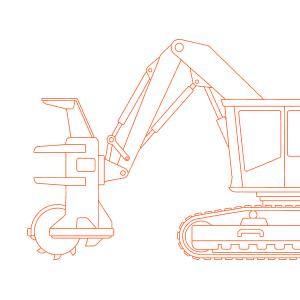
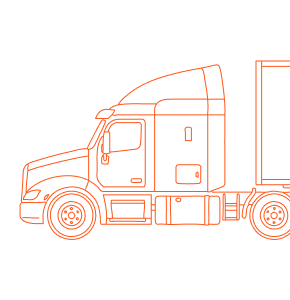
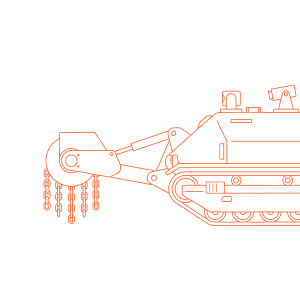
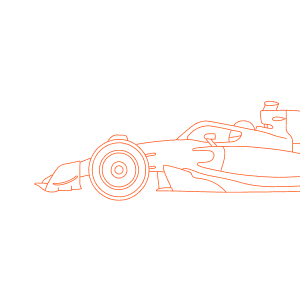
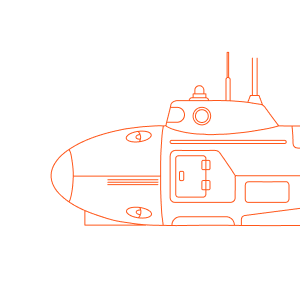
Voysys can support any field-deployed robotic or autonomous vehicle use case. To date, Voysys software has been used in ten industries: sidewalk delivery, forestry, autonomous trucks, construction, logistics, defense and humanitarian demining, motorsport, underwater exploration, mining, and industrial robotics. Over 2,000 vehicles globally have a Voysys remote-operation component running today.
How does Voysys make remote operation safe?
Voysys has spent more than a decade building remote-operation systems for customers who depend on them for safety-critical work. We have helped teams across autonomous trucks, forestry, industrial robotics, and defense design and deploy functionally safe remote-operation architectures — and we bring that experience to every new project. If functional safety is part of your deployment, we have been there before.
How does Voysys handle network failures?
Cellular networks rarely degrade gracefully. They hold, then drop. Oden uses our patented multi-link transport across every available network (4G, 5G, Wi-Fi, satellite) with dynamic forward error correction, adaptive bitrate, and careful modem-buffer management. When one link drops, the feed stays up, and a recovered link comes back into rotation instead of stalling.